
Structural geology is a branch of geology that deals with the study of the architecture, deformation, and tectonic processes of the Earth’s crust. It focuses on understanding the formation and distribution of geological structures and their implications for Earth’s evolution and natural resources.
Fundamental Concepts in Structural Geology
At the core of structural geology are several fundamental concepts, including stress and strain, deformation mechanisms, and rheological properties of rocks. These concepts help geologists interpret the structural features observed in the field and reconstruct the deformation history of rock formations.
Types of Geological Structures
Folds
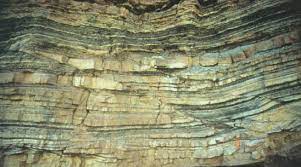
Folds are geological structures formed by the bending or curvature of rock layers in response to compressional forces. They occur at various scales, from microscopic folds in sedimentary rocks to large-scale folds in mountain belts, and provide valuable insights into the tectonic history of a region.
Faults
Faults are fractures in the Earth’s crust along which movement has occurred, resulting in displacement of rock units. They are classified based on the direction of movement (normal, reverse, or strike-slip) and play a significant role in controlling the distribution of earthquakes, mineral deposits, and groundwater flow.
Joints
Joints are fractures in rocks that lack significant displacement and are typically formed in response to tectonic stress or cooling of igneous rocks. They represent planes of weakness in the Earth’s crust and influence the mechanical behavior of rock masses, groundwater circulation, and weathering processes.
Methods of Structural Analysis
Field Mapping
Field mapping involves the systematic observation and recording of geological structures in the field, including bedding attitudes, fold geometries, and fault orientations. It provides essential data for reconstructing the geological history of an area and interpreting tectonic processes.
Structural Measurements
Structural measurements, such as strike and dip, joint spacing, and fault slip, are conducted using specialized tools and techniques in the field. These measurements help quantify the orientation and intensity of deformational features and provide quantitative data for structural analysis and interpretation.
Geological Modeling
Geological modeling involves the integration of field observations, structural measurements, and geophysical data to create three-dimensional representations of subsurface structures. It aids in visualizing and analyzing complex geological features, predicting subsurface behavior, and optimizing resource exploration and development.

Applications of Structural Geology
Resource Exploration
Structural geology plays a crucial role in resource exploration, including mineral deposits, hydrocarbons, and groundwater resources. By analyzing structural controls on mineralization, fault-related traps, and reservoir geometries, geologists can identify exploration targets and assess resource potential.
Hazard Assessment
Structural geology is essential for assessing geological hazards such as earthquakes, landslides, and volcanic eruptions. By mapping active faults, characterizing fault slip rates, and evaluating seismic hazards, geologists contribute to disaster preparedness, land-use planning, and infrastructure resilience.
Engineering Geology
In engineering geology, structural geology informs site investigations, foundation design, and slope stability assessments for construction projects. By understanding the mechanical behavior of rock masses and geological structures, engineers can mitigate risks associated with ground instability and geological hazards.
Challenges in Structural Geology
Despite its importance, structural geology faces challenges such as data uncertainty, scale limitations, and complexity of geological processes. Improving data acquisition techniques, integrating multi-scale observations, and developing advanced modeling approaches are ongoing areas of research.
Future Directions in Structural Geology
The future of structural geology lies in the integration of field observations, laboratory experiments, and computational modeling to unravel the complexities of Earth’s crust. By combining traditional geological methods with advanced technologies such as remote sensing and machine learning, researchers aim to enhance our understanding of tectonic processes, geological hazards, and resource exploration.
Structural geology provides a window into the dynamic processes shaping the Earth’s crust and the distribution of geological resources and hazards. From understanding mountain building to mitigating earthquake risks, its applications are diverse and interdisciplinary. As technology evolves and interdisciplinary collaborations grow, structural geology will continue to be at the forefront of geological research and exploration.
Related articles:


