

Solar energy has emerged as a game-changer in various sectors, and its integration into agriculture has opened up new possibilities and benefits. The use of solar energy in agriculture, often referred to as solar farming or agrivoltaics, is revolutionizing traditional farming practices and paving the way for sustainable and environmentally friendly food production.
One of the key applications of solar energy in agriculture is through the installation of solar panels on farmland. These solar panels harness sunlight and convert it into electricity, which can be used to power various farming operations such as irrigation systems, machinery, and lighting. By utilizing solar power, farmers can reduce their reliance on fossil fuels and lower their energy costs, leading to substantial financial savings in the long run.

Moreover, the surplus electricity generated by solar panels can be fed back into the grid, allowing farmers to become energy producers. This not only provides an additional source of income but also contributes to the overall energy independence and sustainability of the region. Additionally, solar-powered irrigation systems help address water scarcity issues by enabling efficient water usage, as they can be coupled with sensors and automated controls to optimize irrigation schedules based on weather conditions and plant needs.
Solar energy also offers advantages in terms of greenhouse farming. Greenhouses equipped with solar panels can generate clean energy to power ventilation, heating, and cooling systems, ensuring optimal growing conditions for plants. This allows farmers to extend their growing seasons, cultivate crops that are not native to their region, and protect plants from adverse weather conditions.
Furthermore, solar energy promotes sustainable land use by making use of previously unproductive or underutilized land. Solar panels can be installed above crops, providing shade and reducing evaporation, thus helping to conserve water and improve crop yield. This approach, known as agrivoltaics, maximizes land use efficiency and creates a harmonious balance between energy production and food cultivation.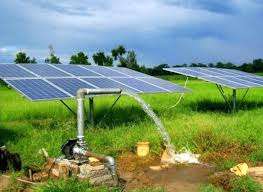
In conclusion, the utilization of solar energy in agriculture brings numerous benefits to farmers and the environment. It reduces dependence on fossil fuels, lowers energy costs, and contributes to the production of clean, renewable energy. Solar-powered irrigation and greenhouse systems enhance water and energy efficiency, enabling farmers to optimize their operations. By integrating solar panels into agricultural land, farmers can create a sustainable and economically viable farming model that meets the growing demand for food while minimizing the ecological footprint. As solar energy technology continues to advance, its role in transforming agriculture is expected to expand, leading to a greener and more resilient agricultural sector.
Also, read blue economy explained.


